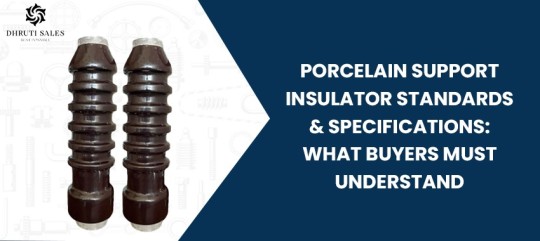
Components such as porcelain support insulators play an essential role within the electric power industry, particularly concerning various components required for transformers, switchgear, and distribution lines, operated and maintained within an industry that deals with high-voltage equipment and components, a process that remains crucial for engineers and project planners across this industry sector.
In this guide, we will walk you through the key parameters you need, the important technical specifications, and the vital need for high-quality porcelain support insulators from a trusted supplier such as Dhruti Sales.
What is a Porcelain Support Insulator?
Porcelain support insulator is a ceramic insulator type used for mechanical support and insulation of conducting wires and high-voltage components. The insulator is made of good quality porcelain material and is capable of resisting moisture, mechanical, and electrical stresses for long periods of time.
Unlike other conventional grommets or ceramic insulators generally used as supports, support insulators are used for mechanical loading as well as insulation. The main function of porcelain support insulators is to support transformer parts, as well as bus ducts and other high voltage equipment.
Why are Standards Important for Porcelain Support Insulators?
Standards define technical standards that have been established by international or national standards bodies, which have the minimum requirements for safety, quality, and performance. The standards established by these bodies regarding ceramic backside insulator products are:
Electrical Insulation Performance
Mechanical Bearing Capacity
Measure and Creepage Distance
Test procedures (Wet/Dry, Current Frequency, Imp
Material quality and production control
Meeting the right standards is important to avoid mistakes, save on maintenance expenses, and increase system availability.
FAQs on Porcelain Support Insulator
What are the main advantages of Porcelain Support Insulator?
Porcelain support insulators are highly durable and possess high electrical dielectric strength, along with strong weathering and mechanical durability, making them suitable for sustained use under different conditions.
How long do porcelain support insulators last?
High-quality porcelain support insulators have been known to survive for 25-40 years with little maintenance because they are robust and have high resistance to environmental factors.
What should buyers check before choosing a porcelain support insulator?
It is recommended that the voltage rating, creepage distances, mechanical strength, and the standards be checked to ensure that the performance requirements of the insulator are satisfied.
Key Specifications to be Understood by the Buyer
When evaluating the porcelain support insulator products, the following technical parameters should be noted:
Creepage Distance: It measures the length of the surface path external to the insulator and prevents tracing the electric path between high voltage and ground. The longer the creep, the higher the resistance to pollution and moisture.
Arc distance and withstand voltage:
• Dry arc distance: The distance between live parts that will require a spark to occur.
• Wet resistance: The voltage level that can be withstand by the insulator in wet conditions.
These are important to ensure the insulation in extreme weather in the real world.
Mechanical Load Capacity: The porcelain support insulators must withstand mechanical stresses such as the conductor weight, wind load, and seismic forces. Cantilever strength or mechanical load in kN indicates the strength of the product.
Quality of materials and glass: The porcelain should be good, defect-free, completely vitrified, and smooth-glazed; Glaze acts to prevent moisture absorption and surface leakage currents. IS standards lay down the following manufacturing controls to achieve maximum reliability.
Test Requirements That Ensure Conformance
porcelain support insulators are usually submitted to the following tests by the manufacturer:
Current frequency resistance test - confirms insulation under rated AC voltage.
Impulse test - insulators performance under electrical or surge loads.
Mechanical Testing - measure the bend, tensile and impact tolerances.
Wet and pollution testing: This confirms performance in either high humidity or polluted environments.
These tests will confirm that the isolator will perform reliably under conditions similar to the real world, for which it is being designed, and reduce the risk of in-service premature failure.
Why Quality Matters: The Real Risk of Non-Compliant Insulators
Following are some of the possible repercussions of using substandard porcelain insulators:
Electrical surges and power outages
Insulation failure caused by moisture penetration
Mechanical failure under load
Short lifespan and high maintenance
Adhering to standards and products tested against these benchmarks reduces these operational risks.
Dhruti Sales: A trusted partner providing porcelain support insulators
When it comes to sourcing quality porcelain support insulator requirements, Dhruti Sales is the most reliable supplier of quality services related to transformer parts and electrical products. Founded in 2019, Dhruti Sales is a company specializing in transformer consumables and electrical insulation materials such as:
porcelain support insulators
Special kinds of insulators, either porcelain or epoxy.
Transformer bushings and accessories
With quality and performance assured, Dhruti Sales specializes in products that adhere to high standards and specifications.
What sets Dhruti Sales Apart?
Industry Expertise: Transformation components and their insulation requirements are understood in depth.
Customized solutions – Offering insulators that are tailored to project voltage and mechanical requirements.
Quality orientation: Conformity, durability, and performance in the field.
Customer Support - Guidance from the time of selection to advice after the sale to ensure the best choice.
Regardless of whether you are purchasing a high voltage installation or upgrading existing infrastructure, knowing the specifications will ensure you purchase the right insulator for the job.
Final thoughts: What buyers should keep in mind
To understand the standard and specification of the porcelain support insulator is not a simple matter. It is a matter of safety and proper functioning of such insulators. When analyzing such insulators:
Check for IS, ANSI, and IEC standard compliance
Review of technical specifications related to creepage distance and mechanical strength
Strict tests and quality control validate Deal with good vendors like Dhruti Sales for quality service and products
By doing so, you can be sure that your electrical systems remain both safe and functional under harsh conditions.