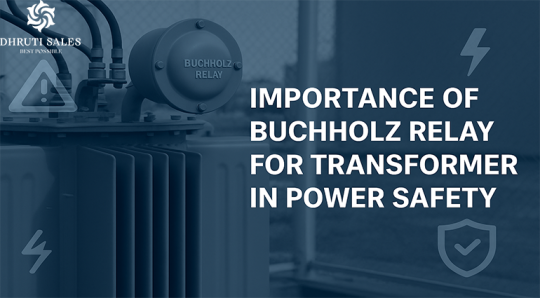
What Is a Buchholz Relay for Transformer?
A Buchholz relay is a gas‑ and oil‑operated protection device installed in the pipe that connects the main transformer tank to the conservator (expansion) tank in oil‑immersed transformers. It detects abnormal conditions inside the transformer—such as insulation breakdown, winding faults, hot spots, core heating, and rapid oil movement caused by severe internal arcing—before catastrophic failure occurs. When gases produced by fault energy accumulate in the relay chamber, or when a surge of oil flows rapidly during a major fault, the relay triggers an alarm and/or trips the transformer circuit breaker.
Where It’s Installed
The relay is mounted in the oil pipe between the main tank and the conservator so it can sense both gas collection (slow‑developing faults) and sudden oil flow (serious internal faults). Proper mounting angle and oil level are critical for sensitivity.
How a Buchholz Relay Works: Two‑Stage Protection
Most Buchholz relays contain two floats (or a float + vane) and mercury switch / micro switch mechanisms:
Gas Accumulation Stage – Alarm: Slow thermal faults, partial discharges, or insulation degradation generate combustible gases that rise and collect in the relay chamber. As the gas displaces oil, the upper float drops, activating an alarm circuit. This gives maintenance teams an early warning to investigate—often preventing major damage.
Oil Surge Stage – Trip: Severe faults (e.g., winding short, high‑energy arc) cause a rapid oil movement from the main tank toward the conservator. A flap/vane senses the surge; if the flow rate exceeds the relay setting, the lower mechanism operates and sends a trip signal to immediately isolate the transformer.
By separating warning from shutdown, the Buchholz Relay for Transformer supports condition‑based maintenance and protects both equipment and personnel.
Why the Buchholz Relay Matters for Power Safety
1. Early Fault Detection Saves Assets
Gas alarms often surface long before the transformer would otherwise fail. Investigating dissolved gas, oil quality, and insulation health at this stage can save a high‑value asset.
2. Fire & Explosion Risk Reduction
Internal arcing that goes undetected can escalate into tank rupture, oil fire, and safety hazards for staff. Trip action from the Buchholz relay reduces incident severity.
3. Reduced Outage Duration & Downtime
Catching issues early enables planned shutdowns, controlled inspections, and faster return to service—critical for utilities, data centers, and continuous‑process industries.
4. Regulatory & Insurance Alignment
Many operators and insurers expect suitable transformer protection. Installing a Buchholz Relay for Transformer demonstrates proactive asset management and compliance diligence.
Common Faults Detected by Buchholz Relays
Insulation deterioration producing low‑energy gas.
Localized hot spots in windings or core.
Turn‑to‑turn faults.
Partial discharge activity.
High‑energy internal faults driving violent oil surges.
While not every internal defect will produce gas detectable in the relay (especially in sealed or gas‑filled units), in conservator‑type oil transformers the Buchholz relay is one of the most useful, inexpensive safety devices available.
Installation Best Practices
Getting full value from a Buchholz relay depends on correct selection and installation:
1. Mounting Position & Tilt – Follow manufacturer angle specs so gas can accumulate reliably at the top float chamber.
2. Oil Pipe Diameter Match – Relay must match the connecting pipe bore to maintain correct flow dynamics for the trip vane.
3. Gas Release Cock Accessibility – Provide a safe, reachable point for sampling accumulated gas for analysis.
4. Wiring Integrity – Separate and test alarm vs. trip circuits; label clearly in the control panel.
5. Routine Functional Tests – Simulate float drop and oil surge conditions during commissioning and scheduled maintenance.
Maintenance & Testing Checklist
Use this quick field reference to keep protection reliable:
Visual oil level check in relay sight glass.
Drain & sample gas when alarm is triggered; send for DGA (dissolved gas analysis) correlation.
Float movement test (mechanical) during outage.
Trip contact continuity verification to protection relays / breaker trip coil.
Periodic insulation resistance checks on wiring circuits.
Recordkeeping – Log dates, gas volumes, and lab results to trend emerging transformer conditions.
Integrating Buchholz Signals with Digital Monitoring
Modern substations increasingly combine analog Buchholz relay contacts with SCADA, IoT sensors, or remote alarm gateways. Doing this lets operators:
Receive SMS/email alerts for gas alarms.
Correlate relay operations with online dissolved gas monitors or oil temperature data.
Trigger predictive maintenance workflows in an asset management platform.
Dhruti Sales can help you integrate conventional Buchholz hardware with digital reporting for faster decision cycles and improved fleet safety.
Related Transformer Safety Components You Shouldn’t Ignore
A transformer’s protection ecosystem is only as strong as its weakest component. Pair your Buchholz relay strategy with other critical accessories:
Porcelain Bushing for Transformer – High‑dielectric, mechanically robust bushings reduce external flashover risk and maintain insulation integrity between internal windings and external circuits.
Silica Gel Breather – Controls moisture ingress in conservator transformers, protecting oil quality and slowing insulation aging.
These internal links help you explore complementary products that directly influence transformer lifespan and safety performance.
Buying Guide: What to Look for in a Buchholz Relay for Transformer
When sourcing, evaluate the following:
1. Compatibility & Voltage Class – Confirm the relay is rated for your transformer’s MVA/kV class and oil volume characteristics.
2. Contact Configuration – Alarm & trip contacts rated for your protection scheme voltage/current.
3. Visibility & Sampling – Clear sight glass, gas volume scale, test/bleed valve.
4. Environmental Sealing – Gaskets and corrosion resistance for outdoor yards in high humidity or dust.
5. Standards Compliance – Alignment with IEC/IS/utility specifications improves acceptance by consultants and auditors.
6. Service & Spares – Availability of replacement floats, switches, and test kits.
Why Source Through Dhruti Sales
Dhruti Sales supports utilities, OEMs, EPC contractors, and industrial users with reliable transformer safety components backed by technical guidance. When you work with us, you get:
Application matching: We help size and select the right Buchholz Relay for Transformer for your tank/conservator geometry.
Quality‑screened suppliers: We work with vetted manufacturers meeting industry norms.
Documentation support: Drawings, wiring diagrams, and installation notes provided to streamline commissioning.
After‑sales assistance: Troubleshooting relay alarms, interpreting gas events, and planning maintenance actions.
Learn More About Buchholz Principles
Want a deeper technical dive into gas‑actuated transformer protection? See this helpful engineering overview: Detailed Buchholz Relay Explainer – Electrical4U.
Final Thoughts & Next Steps
The Buchholz Relay for Transformer is one of the highest‑ROI safety investments you can make in an oil‑immersed, conservator‑type transformer. It gives you early intelligence, automatic trip protection, and actionable maintenance signals—all of which reduce fire risk, downtime, and replacement cost.
Ready to protect your transformer assets? Contact Dhruti Sales today to discuss specifications, pricing, and integration with your existing protection scheme.
Call to Action:
Need a Buchholz Relay for Transformer or related accessories? Reach out to our technical sales team at Dhruti Sales and get a solution built for safety, reliability, and long‑term performance.
Prepared by the Dhruti Sales Technical Applications Team – delivering transformer safety solutions across India.
Power transformers are the beating heart of every substation, utility yard, and industrial power system. Protecting them from internal faults isn’t optional—it’s mission‑critical for uptime, asset life, fire safety, and personnel protection. One of the most proven, reliable, and cost‑effective early fault detection devices is the Buchholz Relay for Transformer. In this article, we’ll explain what it is, how it works, the problems it prevents, best practices for installation and maintenance, and why choosing a high‑quality relay (and supplier) matters for real‑world power safety.
What Is a Buchholz Relay?
A Buchholz relay is a gas‑actuated safety device installed in the oil pipeline between the main transformer tank and the conservator. It detects the presence of fault‑generated gases or sudden surges in transformer oil flow—two tell‑tale signs that something is going wrong inside an oil‑immersed transformer. When abnormal conditions occur, the relay triggers an alarm (for minor faults) or trips the transformer off‑line (for severe internal faults), helping operators intervene before damage escalates.
Where It’s Used
Medium and large oil‑immersed power transformers with conservator tanks.
Industrial and utility substations.
Critical process plants where downtime is expensive or unsafe.
How a Buchholz Relay for Transformer Works (Step by Step)
Minor Internal Fault Begins: Arcing, insulation degradation, or hot spots inside windings decompose transformer oil and cellulose, releasing gas bubbles.
Gas Migration: These gases rise and accumulate in the Buchholz relay chamber located in the pipe to the conservator.
Float Drop = Alarm: Gas displaces oil, lowering the top float; a switch change activates an alarm circuit—early warning without tripping power.
Major Fault / Oil Surge: A severe arc or winding rupture creates a rapid oil surge toward the conservator.
Flap Displacement = Trip: The surge deflects a vane or flap, operating a lower float/switch that issues a trip signal to disconnect the transformer from the system.
Result: Operators get staged protection—alarm first for investigation; automatic trip for major internal faults that could escalate to fire, tank rupture, or catastrophic failure.
Why the Buchholz Relay Matters for Power Safety
Transformers rarely fail without warning—thermal stress, insulation breakdown, and incipient arcing typically generate detectable gases. The Buchholz relay captures these early signals. Here’s why that matters:
1. Early Fault Detection Saves Assets
Catching issues during the gas‑generation phase allows testing, oil sampling, and predictive maintenance before core insulation or windings are severely damaged.
2. Reduced Fire & Explosion Risk
Internal arcing can rapidly heat oil. Automatic trip on major surges helps isolate the transformer before a tank burst or oil ignition event.
3. Downtime Prevention
A short outage for inspection after a Buchholz alarm is far cheaper than weeks of unplanned shutdown after a catastrophic failure.
4. Compliance & Insurance Confidence
Many utilities and industrial standards recommend Buchholz protection on conservator‑type transformers above certain kVA ratings. Demonstrating protective relays in place can support audit, compliance, and insurance requirements.
Common Internal Faults the Buchholz Relay Can Help Detect
| Fault Type | What Happens Internally | How Relay Responds |
|---|
| Localized Overheating | Hot spot decomposes oil/cellulose | Gas collects → Alarm |
| Turn‑to‑Turn Short | Arcing generates gas & pressure | Alarm; may escalate to Trip |
| Core/Earth Fault | Insulation breakdown → gas | Alarm/Trip depending on severity |
| Oil Surge from Severe Arc | Violent disturbance in oil | Instant Trip |
Note: The relay does not “diagnose” the fault type; it signals abnormal internal conditions that warrant investigation.
Installation Best Practices for Reliable Performance
Correct installation determines whether your relay provides dependable protection or nuisance alarms.
Mounting Position: Installed in the sloped oil pipe between main tank and conservator, typically at a level that allows rising gas to collect in the relay housing.
Correct Pipe Inclination: Ensure adequate slope from transformer tank to conservator so gas naturally migrates upward into the relay.
Oil Filling & Bleeding: After installation or maintenance, bleed trapped air; unwanted air pockets can trigger false alarms.
Cable & Control Wiring: Securely terminate alarm and trip contacts into the protection panel, SCADA I/O, or transformer control cabinet. Use separate circuits for alarm vs. trip.
Periodic Functional Test: Simulate gas accumulation (manual testing provision) and flow trip to validate contact logic.
Maintenance & Testing Checklist
Use this quick maintenance framework to keep your Buchholz relay in working order:
Visual inspection for oil leaks, corrosion, or mechanical damage.
Check oil level indicator (if equipped) and gas collection window.
Drain and sample accumulated gas for dissolved gas analysis (DGA) correlation.
Manually operate alarm float; confirm alarm signal at control panel.
Perform trip test by actuating flap/vane mechanism.
Verify contact resistance and continuity.
Confirm SCADA/relay panel event logging.
Record date, technician, observations—build a trend history.
Perform routine checks during scheduled transformer maintenance intervals or when a relay alarm occurs.
Integrating Buchholz Relay Signals with Digital Monitoring
Modern substations increasingly link traditional electromechanical devices with digital protection and condition‑monitoring systems. Wiring your Buchholz Relay for Transformer into:
Numerical Protection Relays for logic voting with temperature and differential protection.
SCADA / DCS Systems for remote alarms, SMS/email alerts, and event time‑stamping.
Predictive Analytics Platforms that combine DGA data, load history, and relay operations to prioritize maintenance.
This integration turns a simple mechanical safety switch into a data point for predictive reliability.
Related Components That Protect Transformer Health
Protection is a system—not a single device. Pairing your Buchholz relay with other high‑quality transformer accessories improves reliability and monitoring accuracy.
Porcelain Bushing for Transformer – Critical for safe current transfer through the tank wall; cracks or contamination can lead to flashover and faults.
Silica Gel Breather – Controls moisture ingress into transformer oil; moisture accelerates insulation breakdown and gas formation that can trigger Buchholz alarms.
These internal links help readers explore transformer health as a complete system—and help search engines understand topical relevance across your site.
When specifying or replacing a relay, evaluate:
Transformer MVA rating & voltage class.
Pipe diameter between tank & conservator.
Contact rating (alarm/trip) voltage & current.
Test provisions (gas release valves, test levers).
Visibility (glass/indicator for gas level).
Weather & corrosion protection (IP rating, UV‑resistant finishes).
Compliance with IEC/IS/utility specifications.
Partnering with an experienced transformer accessory supplier helps you match relay design with real‑world operating conditions.
Why Source Your Buchholz Relay from Dhruti Sales
At Dhruti Sales, we don’t just sell parts—we help power and industrial customers build safer, longer‑lasting transformer systems. Here’s what sets us apart:
Application Guidance: Tell us your transformer rating, cooling type, and operating environment—we’ll recommend the right Buchholz Relay for Transformer model.
Quality‑Checked Inventory: We work with proven manufacturers and inspect incoming components to ensure dimensional and contact integrity.
Compatibility Support: Need to retrofit an older transformer? We help with mounting, thread adapters, and wiring configuration.
Fast Dispatch Across India: Minimize downtime with quick fulfillment and packaging suited for utility yards and OEMs.
One‑Stop Transformer Accessories: From relays and breathers to bushings and seals, simplify procurement and documentation through a single vendor you can trust.
Learn More: Technical Reference
Want a deeper technical dive into Buchholz relay principles, construction, and testing methods? See this helpful industry explainer: Detailed Guide to Buchholz Relay Operation – Electrical4U. (External resource.)
Protect Your Transformers Today
If you’re responsible for electrical reliability, now is the time to upgrade or audit your transformer protection scheme. Contact Dhruti Sales to discuss specifications, pricing, bulk orders, or technical fit for your site.
Ready to buy or get a technical quote? Visit our website: https://www.dhrutisales.co.in/ (or reach out to our sales team for immediate assistance).