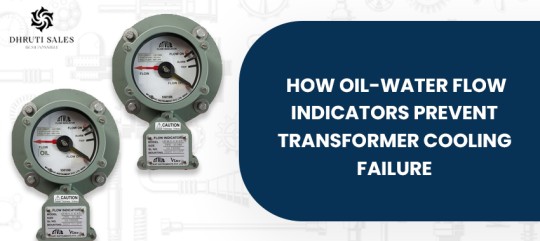
Effective cooling significantly influences the safety and reliability of transformers. In the case of an oil-immersed transformer, correct fluid circulation is absolutely necessary. One of the best guards against the failure of a cooling system is the oil-water flow indicator. In this paper, we look at how an oil-water flow indicator protects the transformer, why Dhruthi Cell's oil-water flow indicator is an ideal choice, and how this device can help avert disastrous cooling failures.
Why is Transformer Cooling Important?
Transformers produce much heat while working. Without cooling, these high temperatures begin to deteriorate the insulating oil and damage the windings, which can result in transformer failure. In transformers using forced circulation of cooling agent, such as oil pumps and water cooling, any failure of flow will impede the dissipation of heat and result in overheating.
The oil-water flow indicator is a simple but powerful tool, acting as a safety guard in the cooling circuit by monitoring direction and speed of coolant flow. In the case of an abnormal condition determined through this flow indicator, an alert or trip occurs, which calls maintenance teams into action before overheating of the system can result.
What is an Oil-Water Flow Indicator?
This is essentially a mechanical or magnetic device installed in line with the cooling circuit of the transformer. It consists of a vane or vane that bends as the fluid flows. This deflection is translated into a visual signal and often triggers microswitches or electrical contacts.
According to Dhruti Sales, their oil-water flow indicator is designed for power transformers, allowing users to identify if the flow rate and direction of the transformer oil is appropriate.
The oil-water flow indicator developed by Dhruti Sales is available with disc sizes of 100mm, 150mm, and 200mm to suit various pipeline dimensions and system requirements.
How Oil-Water Flow Indicators Work to Prevent Cooling Failure
Flow direction monitoring
An oil-water flow indicator ensures the correct direction of flow of the coolant, either oil or water. If the flow is reversed, then this may indicate some serious system failure, such as a pump running backwards or misconfiguration of the valve. A properly designed oil-water flow indicator detects this reversal and raises a flag.
Ensure Flow Rate
In many systems, there is a minimum current required in order to maintain cooling safely. If the current falls below a certain limit, it can trip the internal switch, often a mercury switch or microswitch, connected to the oil-water flow indicator, which then activates an alarm or protective shutdown. For example, in some designs, when current drops to about 70 percent of rated speed, contacts actuate to warn operators.
Error alerts and safety signals
If the oil-water flow indicator detects abnormal flow, it can send an electrical signal to the transformer protection system. These signals can also trigger warnings, start the standby pumps, or even trip the transformer when necessary. This prompt detection avoids protracted warming-up and subsequent failure.
Reliability under demanding conditions
Transformers use high-quality oil-water flow indicators that would function reliably under extreme environmental conditions, such as high temperature, vibrations, and fluctuating pressures. The construction of some industrial flow indicators is robust enough to be suitable for transformer circuits.
Why choose Dhruti Cells Oil-Water Flow Indicator?
Multi-disc size: The oil-water flow indicator by Dhruti Sales is available in various disc sizes such as 100mm, 150mm, and 200mm. With this, customers can select an appropriate indicator that best matches their pipeline dimensions.
Real-World Impact of Oil-Water Flow Indicator Failure
When the cooling pump fails, or the valve gets stuck, it impairs the flow of the transformer oil. According to best practices in transformer maintenance, failure of forced oil circulation is one of the most dangerous failure modes as it leads directly to increased oil temperature and possible insulation failure.
Without a working oil-water flow indicator, such failures can go unnoticed until they become catastrophic. Overheating degrades the insulating oil, increasing viscosity, impairing heat transfer, and accelerating transformer ageing. On the other hand, by installing a reliable oil-water flow indicator, operators can be assured of a first line of defense-a monitoring device that constantly checks critical fluid flow parameters and warns them before thermal damage takes place.
Best practice for the Installation of Oil-Water Flow Indicators
Correct Location: The oil-water flow indicator should be set in a straight section of the pipe, and preferably installed downstream of the cooling pump and in advance of major branches for accurate readings.
Periodic Testing: Periodically test the oil-water flow indicator to ensure that it is responding correctly. Create simulated flow conditions, during maintenance, and monitor the indicators for paddle movement and switch actuation.
Alarm integration: Connect the electrical contacts of the oil/water flow indicator to the protection system of your transformer. In this way, abnormal flow can trigger alarms or automatic responses instantly.
Long-term value of Oil-Water Flow Indicators
Investing in good quality oil-water flow indicator, like the Dhruti Sales, is not only about preventing failure but also toward ensuring longer transformer life. Continuously monitoring the flow helps in maintaining the cooling at the best possible level, which, in turn:
Preserves the dielectric strength of transformer oil.
Reduces thermal stress on winding insulation
Prevents unplanned shutdowns or tripping of the transformer
Conclusion:
Installing an oil-water flow indicator is not just about having another monitoring device but a vital safety device to be deployed on a transformer cooling system. Once a superior quality oil-water flow indicator device has been installed-like one from Dhruti Sales -maintenance teams can rapidly identify abnormal flow, thus averting cooling failures and protecting their transformers from overheating and damages.